

In today’s tech-driven world, having a solid home networking lab isn’t just a luxury; it’s practically a necessity. Imagine transforming your living room into a high-tech playground where you can tinker with gadgets, test new software, and boost your Wi-Fi like a pro. It’s like having a personal IT department—minus the awkward small talk and coffee breaks.
Setting up a home networking lab can be both fun and rewarding. Whether you’re a tech enthusiast or just someone trying to outsmart the neighbor’s Wi-Fi, creating this space opens the door to endless possibilities. From experimenting with the latest routers to mastering cybersecurity, a home networking lab is the ultimate sandbox for tech lovers. So, roll up those sleeves and get ready to dive into a world where the only limit is your imagination (and maybe your budget).
Overview of Home Networking Labs
Home networking labs play a crucial role in enhancing one’s understanding of technology. They serve as practical environments for experimentation with various devices and software. One can set up multiple components, including routers, switches, and firewalls, to explore different networking scenarios.
A diverse range of tools exists for building these labs. Simulation software like Cisco Packet Tracer and GNS3 allows individuals to create virtual networks without the need for physical equipment. Physical devices add an authentic touch, enabling users to comprehend real-world networking issues.
Benefits abound for those who create a home networking lab. Networking skills improve through hands-on practice with troubleshooting techniques. Configuration experience gained in such a lab translates directly into professional capabilities. Additionally, testing new devices before implementing them in a home network reduces potential disruptions.
One can customize a home networking lab to fit specific learning goals. For beginners, basic routers and switches suffice to grasp fundamental concepts. More experienced users might require advanced equipment to delve into topics like network security or VoIP systems.
Costs can vary significantly based on the equipment selected. Budget-friendly options are available, including used networking hardware from online marketplaces. Investing in professional-grade equipment provides a robust platform for learning but often requires a larger budget.
Overall, home networking labs create opportunities for exploration and knowledge building. They foster a deeper understanding of networking principles and practices, making technology more accessible. By experimenting with various components, users enhance both personal skills and network performance.
Essential Components of a Home Networking Lab
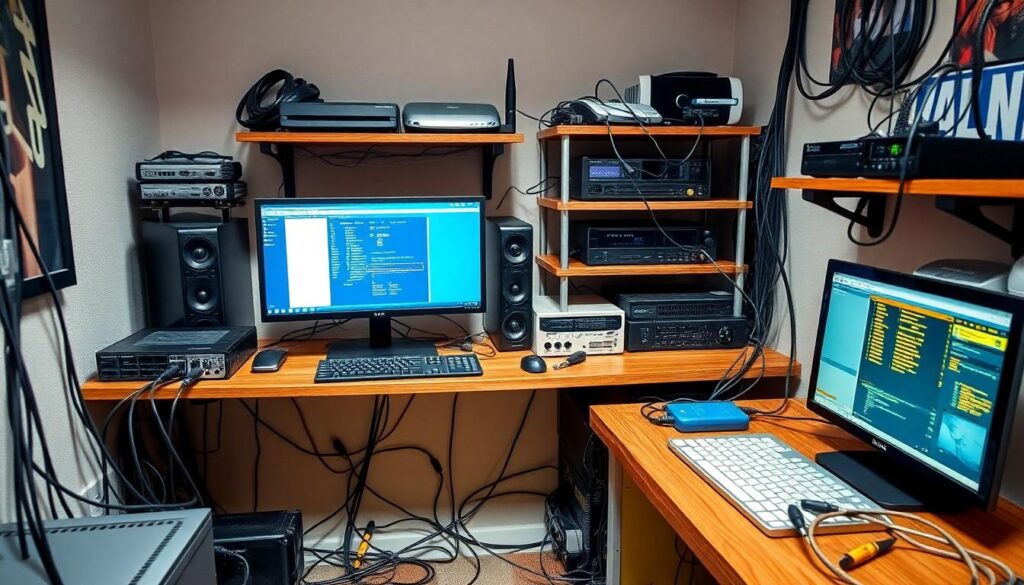
Creating a functional home networking lab requires essential components that enhance learning and experimentation. Key items include routers, switches, and specialized devices designed for testing.
Routers and Switches
Routers manage data flow between networks, directing traffic efficiently. Everyone involved in home networking labs needs reliable routers to facilitate communication between devices. Switches connect multiple devices within a local area network, ensuring smooth data transfer. Experimenting with various router models and switch configurations allows users to develop practical networking skills. Understanding the differences between consumer-grade and enterprise-level equipment can significantly impact lab effectiveness.
Devices for Testing and Experimentation
Devices specifically for testing enhance hands-on learning. Network interface cards serve as essential tools for connecting computers to the network, providing a practical experience. Firewalls and intrusion detection systems help in understanding network security features. Virtual machines facilitate the exploration of different operating systems without physical hardware constraints. Using software like Cisco Packet Tracer or GNS3 can simulate network environments, allowing users to test configurations in a safe manner. All these devices and tools create an engaging and versatile home networking lab experience.
Setting Up Your Home Networking Lab
Creating a home networking lab requires careful consideration and setup. The right layout and configuration streamline the learning experience and make experimentation more effective.
Planning the Layout
A well-organized layout maximizes efficiency and accessibility. Allocate specific areas for devices and equipment, ensuring easy reach for cables and power sources. Group similar devices together to reduce clutter and enhance workflow. Prioritize space for routers and switches to facilitate optimal cable management. Consider using racks or shelves to safely secure equipment and maintain a clean environment. Plan for ventilation, as devices generate heat during operation. Incorporate workspace for testing and troubleshooting, allowing for hands-on practice without interruption.
Configuring the Network
Configuring the network requires attention to detail and a basic understanding of networking principles. Start by connecting the main router to a modem to establish internet access. Assign IP addresses strategically, either via DHCP or manually, based on device needs. Set up additional devices such as switches and access points to expand coverage and capabilities. Utilize VLANs to segment traffic for better security and performance. Implement firewall settings to protect the network from unauthorized access. Test connections regularly to ensure devices communicate effectively and troubleshoot issues promptly to maintain a robust networking environment.
Common Use Cases for Home Networking Labs
Home networking labs serve multiple purposes, and they cater to various interests in technology. Below are some primary use cases.
Learning Networking Concepts
Learning networking concepts becomes more engaging through practical experience. A home networking lab enables hands-on exploration of routing protocols and IP addressing schemes. Students grasp theoretical knowledge as they configure devices like routers and switches. They visualize how different devices interact within a local area network. Additionally, lab setups often include simulations of real-world scenarios, enhancing understanding of network topologies and data flow. Experimentation with various configurations promotes problem-solving skills. Building a lab tailored to personal learning objectives fosters an in-depth understanding of network design, security, and management.
Testing New Technologies
Testing new technologies occurs naturally within a home networking lab. Early adopters experiment with emerging devices and applications, assessing their performance and compatibility. This allows for the evaluation of new network hardware such as switches or wireless access points. Furthermore, virtualization software can simulate diverse environments, facilitating the exploration of innovative solutions. Hands-on experience with advanced features and settings leads to better performance before implementation in larger networks. Users can also identify potential issues and rectify them proactively, ensuring a seamless network experience. Ultimately, these labs are ideal for those looking to stay ahead of technology trends.
Best Practices for Home Networking Labs
Creating an effective home networking lab begins with proper planning. Lay out a design that optimizes space and accessibility for all devices. Use dedicated areas for different equipment to enhance efficiency and minimize clutter.
Choosing reliable components remains crucial. Select high-quality routers and switches to ensure strong connectivity. Invest in devices that support your specific needs, whether testing or learning.
Cable management significantly impacts organization. Utilize cable ties and labels for easy identification, preventing tangles and confusion. Keep cables accessible yet neatly arranged to simplify maintenance.
Implementing security measures is non-negotiable. Configure firewalls to protect sensitive data and establish VLANs for better traffic management. Regular updates of firmware enhance security and performance.
Testing remains an essential practice in any lab. Conduct routine checks on network performance and troubleshoot issues as they arise. Experimenting with configurations helps to develop a deeper understanding of networking principles.
Documenting configurations and changes promotes clarity. Maintaining a log aids in tracking the history of setups and adjustments. This practice supports learning and facilitates troubleshooting in the future.
Engaging in community forums enriches the home networking lab experience. Sharing experiences and challenges with like-minded individuals fosters knowledge exchange. Participating in discussions enhances learning opportunities and provides fresh insights.
Leveraging simulation software can enhance real-world learning. Utilize platforms like Cisco Packet Tracer to visualize networking concepts before implementation. Practical experience complements theoretical knowledge, bridging gaps in understanding.
Creating a home networking lab is a rewarding endeavor that opens up a world of possibilities for tech enthusiasts and learners alike. It encourages hands-on experimentation and fosters a deeper understanding of networking concepts and technologies. By carefully selecting components and maintaining an organized setup, individuals can enhance their skills while ensuring a secure and efficient network environment.
Whether it’s testing new devices or simulating diverse network scenarios, a home networking lab serves as an invaluable resource for personal growth and innovation. Embracing this journey not only boosts confidence in handling technology but also prepares individuals for future advancements in the ever-evolving tech landscape.


